
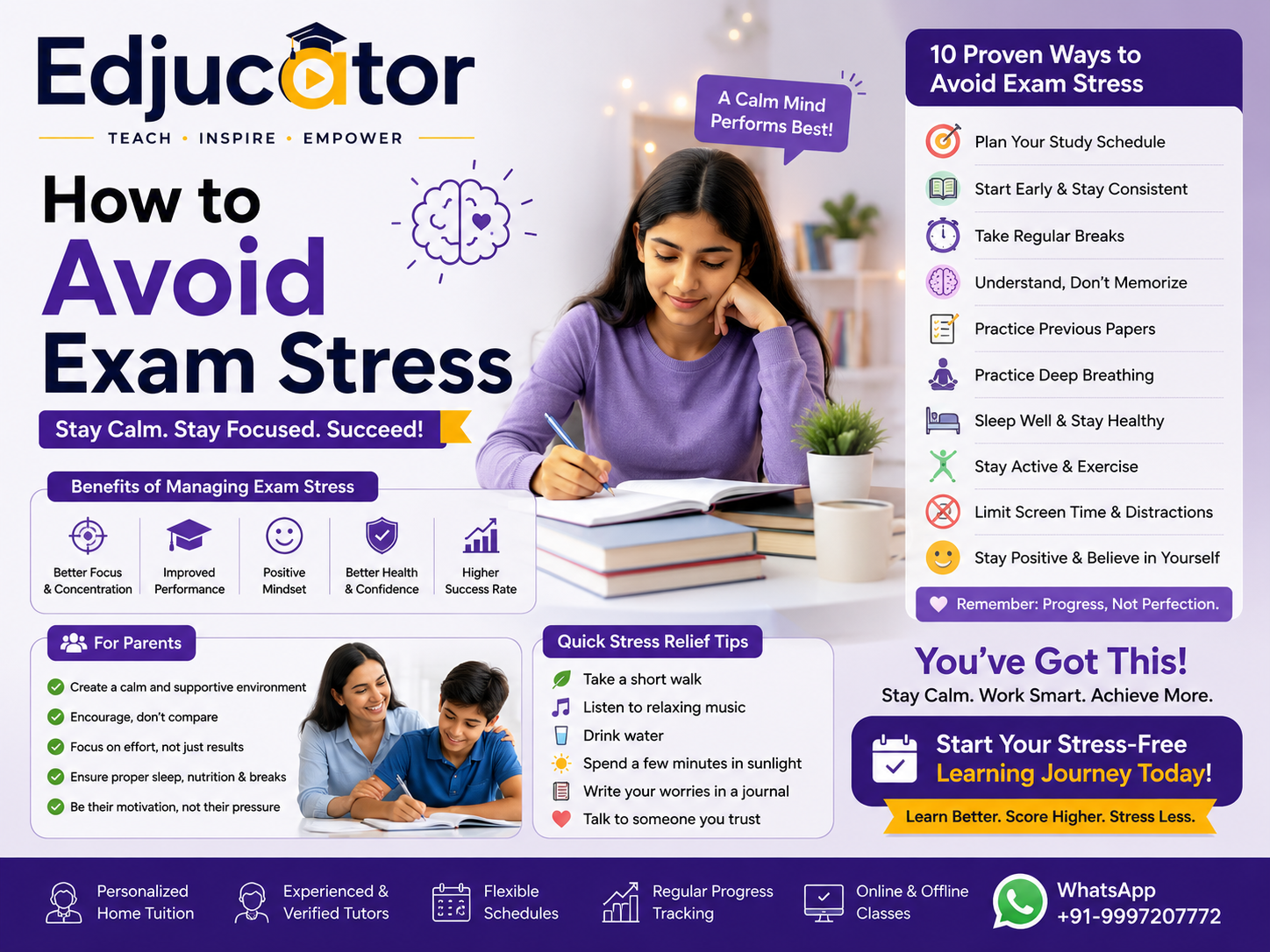
How to Avoid Exam Stress: 15 Proven Tips for Students
Introduction:
Exams are a big part of every student’s academic life and they have pressure, anxiety and stress to them. And if you’re preparing for CBSE Board Exams, ICSE Exams, JEE, NEET, CUET, Olympiads or school assessments and feel a little nervous, it is normal.
Excessive stress is bad for concentration, memory, sleep, confidence, and physical health, but it is only for that kind of stress that we have to take exam stress and that is good and bad.
In this guide, we’ll explore practical and science-backed methods to help us reduce exam stress, focus and also perform at our best.
What Is Exam Stress?
Exam stress is the physical and emotional response students experience when they feel overwhelmed by academic expectations or fear of poor performance.
A small amount of stress can motivate you to study. But when stress becomes excessive, it can reduce productivity and negatively affect your results.
How to Avoid Exam Stress: 15 Proven Tips for Students
Introduction
Exams are an important part of every student’s academic journey, but they often bring pressure, anxiety, and stress. Whether you’re preparing for CBSE Board Exams, ICSE Exams, JEE, NEET, CUET, Olympiads, or school assessments, feeling a little nervous is completely normal.
However, excessive stress can affect concentration, memory, sleep, confidence, and even physical health. The good news is that exam stress can be managed with the right study habits, planning, and mindset.
In this guide, we’ll explore practical, science-backed strategies to reduce exam stress, improve focus, and help students perform at their best.
What Is Exam Stress?
Exam stress is the physical and emotional response students experience when they feel overwhelmed by academic expectations or fear of poor performance.
A small amount of stress can motivate you to study. But when stress becomes excessive, it can reduce productivity and negatively affect your results.
Common Causes of Exam Stress
Many factors contribute to exam-related stress, including:
- Poor time management
- Last-minute cramming
- Fear of failure
- High parental or self-expectations
- Lack of preparation
- Comparing yourself with classmates
- Too much screen time and social media
- Inadequate sleep
- Unclear concepts in difficult subjects
Identifying the cause is the first step toward managing stress effectively.
Signs That You’re Experiencing Exam Stress
Recognizing the symptoms early can help you take action before stress becomes overwhelming.
Emotional Signs
- Feeling anxious or worried
- Irritability
- Low confidence
- Mood swings
- Difficulty staying motivated
Physical Signs
- Headaches
- Fatigue
- Trouble sleeping
- Loss of appetite
- Stomach discomfort
Study-Related Signs
- Difficulty concentrating
- Forgetting previously learned concepts
- Procrastination
- Avoiding studies altogether
Why Managing Exam Stress Is Important
Students who manage stress effectively often experience:
- Better concentration
- Improved memory retention
- Higher confidence
- Better time management
- Healthier sleep patterns
- Improved exam performance
Success is not only about studying harder—it’s also about maintaining a healthy body and mind.
15 Proven Ways to Avoid Exam Stress
1. Create a Realistic Study Plan
Break your syllabus into smaller, manageable sections and allocate time for each subject. A structured timetable prevents last-minute panic.
2. Start Preparing Early
Avoid cramming the night before exams. Begin revision weeks in advance to strengthen long-term memory.
3. Follow the Pomodoro Technique
Study for 25–30 minutes, followed by a 5-minute break. After four sessions, take a longer break. This improves focus and prevents burnout.
4. Practice Active Recall
Instead of rereading textbooks, test yourself regularly. Active recall strengthens memory and highlights areas that need more attention.
5. Solve Previous Year Question Papers
Practicing past papers helps you:
- Understand the exam pattern
- Improve speed
- Identify frequently asked questions
- Build confidence
6. Revise Regularly
Daily and weekly revision prevents information overload before exams.
7. Get Enough Sleep
Aim for 7–9 hours of sleep each night. Sleep helps consolidate memory and improves concentration.
8. Eat Healthy Foods
Choose balanced meals that include fruits, vegetables, whole grains, and proteins. Stay hydrated throughout the day.
Avoid excessive caffeine, sugary drinks, and junk food during exam season.
9. Stay Physically Active
Even 20–30 minutes of walking, stretching, or light exercise can reduce stress and improve mood.
10. Limit Screen Time
Reduce distractions from social media and excessive mobile use. Set dedicated study hours without notifications.
11. Practice Deep Breathing
Simple breathing exercises can calm your mind before studying or entering the examination hall.
12. Stay Positive
Replace negative thoughts like “I can’t do this” with “I’m improving every day.” A positive mindset boosts confidence and resilience.
13. Ask for Help
If you’re struggling with a subject, don’t hesitate to seek help from teachers, parents, or tutors. Clarifying doubts early prevents unnecessary stress.
14. Avoid Comparing Yourself with Others
Every student learns at a different pace. Focus on your own progress rather than comparing scores or study hours.
15. Take Short Breaks
Studying continuously for long hours can reduce productivity. Short breaks help your brain recharge and improve learning efficiency.
What Parents Can Do to Help
Parents play an important role in reducing exam stress.
Helpful Practices
- Encourage consistent study habits.
- Appreciate effort rather than only results.
- Maintain a calm and supportive environment.
- Ensure children get enough sleep and nutritious meals.
- Avoid comparing them with other students.
- Celebrate small achievements to build confidence.
Common Mistakes Students Make During Exams
Avoid these common errors:
❌ Studying all night before exams
❌ Ignoring revision
❌ Skipping meals
❌ Depending only on guidebooks
❌ Not practicing mock tests
❌ Using mobile phones excessively
❌ Ignoring mental well-being
Healthy Daily Routine During Exam Season
| Time | Activity |
|---|---|
| 6:30 AM | Wake up & light exercise |
| 7:00 AM | Healthy breakfast |
| 8:00–11:00 AM | Focused study session |
| 11:00 AM | Short break |
| 11:30 AM–1:00 PM | Practice questions |
| 1:00 PM | Lunch & relaxation |
| 2:00–4:00 PM | Revision |
| 4:00 PM | Walk or physical activity |
| 5:00–7:00 PM | Mock test or difficult subjects |
| 8:00 PM | Dinner |
| 9:00 PM | Quick revision |
| 10:30 PM | Sleep |
When to Seek Additional Support
If stress becomes overwhelming and begins affecting your daily life, academic performance, or health, speak to a trusted parent, teacher, school counselor, or qualified mental health professional. Seeking support early is a sign of strength, not weakness.
Expert Tips from Edjucator
Our experienced tutors recommend:
- Prepare consistently throughout the year.
- Focus on understanding concepts instead of memorizing.
- Use revision techniques like Active Recall and Spaced Repetition.
- Take regular breaks and maintain a balanced routine.
- Solve mock tests under timed conditions.
- Don’t hesitate to ask questions when concepts are unclear.
Personalized guidance can make exam preparation more structured and less stressful.
Key Takeaways
- Start preparing early.
- Follow a realistic study plan.
- Practice previous year papers.
- Sleep well and eat healthy.
- Take regular breaks.
- Limit screen time.
- Stay physically active.
- Ask for help when needed.
- Focus on progress, not perfection.
Final Thoughts
Exam stress is common, but it doesn’t have to control your performance. By adopting healthy study habits, managing your time effectively, and maintaining a positive mindset, you can approach exams with confidence and clarity.
At Edjucator, we support students with personalized Home Tuition, Online Classes, structured study plans, regular assessments, and one-to-one mentoring. Our goal is not only to improve academic performance but also to help students develop confidence and lifelong learning skills.
Remember, success is built through consistent effort not last-minute pressure.
More Related Topics
- Home Tuition Near Me
- Study Material
- Best Revision Techniques
- Top 10 Study Habits That Help Students Score Better
- Best Books for CBSE Students
- Best Books for ICSE Students
- Choosing the Right Tutor
- Screen Time for Students
- Book a Free Demo Class
Reduce Exam Stress. Learn with Confidence.
Exams become easier when you have the right support. Edjucator offers personalized home tuition and online classes that help students stay organized, clear doubts, and prepare confidently.
Why Choose Edjucator?
- ✅ Experienced & Verified Tutors
- ✅ One-to-One Home Tuition
- ✅ Live Online Classes
- ✅ Customized Study Plans
- ✅ Regular Mock Tests & Progress Reports
- ✅ Support for CBSE, ICSE & State Boards
- ✅ JEE, NEET & CUET Preparation
📞 9997207772 Book Your FREE Demo Class Today and take the next step toward academic excellence.